WIN-BIG Atlantic Event: Breaking limits and inspiring change in the Blue Economy
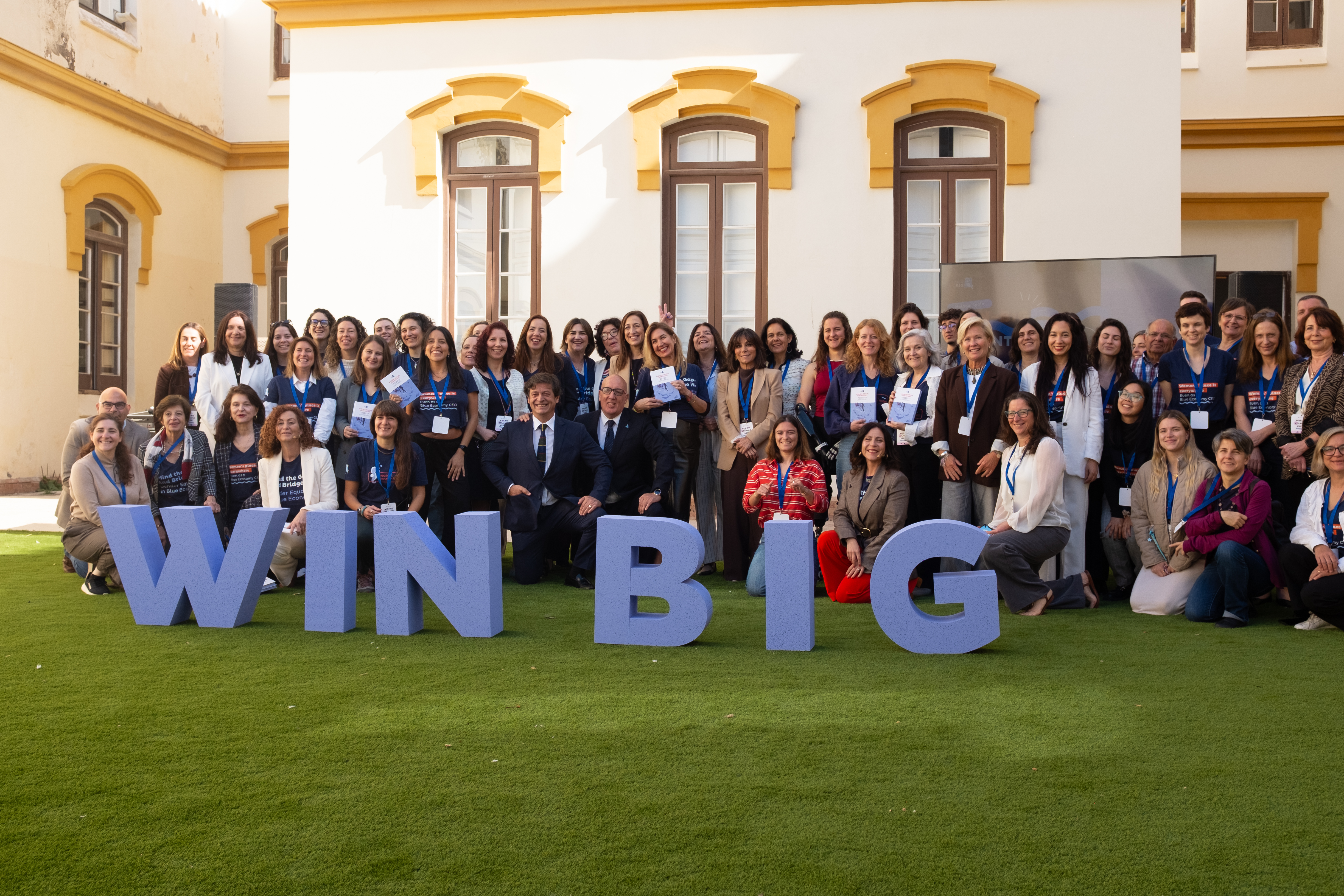
On March 25 and 26, we brought the third and final edition of the WIN-BIG sea basin events to Málaga, Spain, this time focusing on the Atlantic Ocean.
Around 100 participants came together to share their experiences and visions for the future of the ocean. Speakers and panelists discussed progress, but also the gaps that still exist. The message that stayed with us was simple: when women thrive in this sector, the entire Blue Economy moves forward with them.
Surfing the waves of resilience
The day opened with a keynote that set the tone in the best possible way. Spanish and European Adaptive Surfing Champion
Sarah Almagro took us into her world with “Breaking Limits: The Surfer’s Mindset”. Through
her story, Almagro showed how courage, persistence, and adaptability—skills learned from surfing—can inspire
personal and professional growth.
“The sea treats everyone equally. When the wave comes, it is going to sweep you away, no matter who you are,” she said.
It was a powerful reminder that working in and with the ocean demands resilience, but also a willingness to embrace challenge and change.
Where we stand on gender equality
As the conversations moved into policy and research, the tone shifted to a more direct one.
Helena Vieira, WIN-BIG Project Coordinator, didn’t sugar-coat it. At the current pace, it could take
more than a century to reach gender equality in the sector. Measures like quotas can help open doors, but they don’t
always translate into real influence.
There’s still a gap between being present and being heard.
The discussions highlighted that gender inclusion is essential for the sector to succeed. Emerging areas such as marine robotics, offshore energy, and biotechnology cannot afford to ignore half of the potential workforce. Edel Doherty from the University of Galway shared similar insights from the survey conducted within the WIN-BIG project. Even as gender balance improves, 21% of women surveyed reported feeling discriminated against. This is especially true in traditional sectors, but it is also present in newer technical fields. Policies and support for younger generations are vital to help women explore the full range of careers in the maritime sector.
Stories that make a difference
One of the most engaging parts of the day focused on communication and storytelling. Charlie
Sarria, researcher, science communicator, and co-founder of the NGO Condrik, shared how meeting Jane Goodall
influenced his career and why connecting people with the ocean through stories is so important.
“Scientific communication helps people connect with and fall in love with the sea,” he said.
That idea carried through the session. Mari Carmen García and Olga Sánchez presented the Oceanicas project as a growing effort to support and retain women in marine science. And Carmen Garrido emphasised that if research is publicly funded, it should also be understandable and accessible to the public so everyone could benefit from it. Because knowledge only creates impact when people can actually engage with it.
Innovation and opportunit y
The event also brought forward examples of what the future can look like when innovation and
sustainability come together. Initiatives such as Reconnect and Life
Bioencapsulation are turning environmental challenges into opportunities. Fish discards are transformed into valuable
ingredients, and invasive algae are used to make sustainable feed and superfoods. These projects show that protecting
the environment and building a profitable economy can go hand in
hand.
At the same time, a recurring issue came up. Women are still more visible in supporting roles, and far less present in technical or decision-making positions. Shifting that balance is key if the sector wants to reach its full potential.
Key lessons from Malaga
Five main lessons emerged from the day:
- Inclusion is not optional, it’s essential for the future of the Blue Economy.
- Progress is happening, but far too slowly. Quotas, incentives, and targeted policies can help speed things up.
- Representation and visibility can genuinely shape career choices and inspire the next generation.
- Access to leadership and technical roles for women still needs to improve.
- Women-led innovations are already shaping a sustainable and competitive Blue Economy.
The WIN-BIG Atlantic event, more than a just a conference, was a clear call to action. By supporting women, encouraging inclusion, and embracing innovation, the maritime sector can build a Blue Economy that is resilient, fair, and prosperous for everyone. In our coordinator's words:
The idea of the WIN- BIG project and these conferences is not to be here complaining. It's to provide data and solutions, to inspire more young people to choose blue economy careers, and to tell businesses and policymakers how they actually can empower women to empower businesses and to empower countries. - Helena Vieira
The recording of the conference is available on the WIN-BIG YouTube channel.